Hair loss often hides more than meets the eye. Beyond genetics or hormones, silent nutritional deficiencies can destabilize the hair cycle in ways that go unnoticed.
Among them, iron and vitamin D deficiency remain the most underestimated. Both nutrients regulate oxygen transport, cellular energy, and follicle renewal – functions that decide whether your hair grows or falls.
Within Beyond Hair & Culture’s Understanding Hair Loss category, this piece explores how low ferritin levels, reduced vitamin D and hair follicle activity, and poor nutrient absorption can set off diffuse shedding.
Learn how to identify the link between low iron and hair thinning, restore balance through foods rich in iron for hair health, and understand why proper testing is essential before turning to supplements for hair loss due to deficiency.
Iron deficiency and hair loss: When low ferritin levels weaken the hair cycle
Iron supports oxygen transport, energy metabolism, and cellular renewal — all essential to the survival of your hair follicles. When levels drop, oxygen flow slows, and follicles lose their rhythm of growth. The result often appears as diffuse hair loss or gradual thinning linked to iron and vitamin D deficiency.
Several studies have connected low ferritin levels with different types of hair shedding. Ferritin works as an internal storage for iron, and its depletion signals the body’s first warning of imbalance. Those with reduced ferritin are statistically more likely to experience telogen effluvium or chronic hair thinning caused by nutrient deficiency.
What is the role of ferritin in your hair health?
Ferritin holds the key to understanding the link between low iron and hair thinning. It stores iron safely inside cells and releases it whenever oxygen transport demands increase.
When ferritin levels drop, your hair follicles receive less nourishment, which weakens the anagen (growth) phase and triggers premature rest phases.
Studies highlight this mechanism in telogen effluvium, androgenetic alopecia, and alopecia areata, proving that even mild deficiencies can alter follicle behavior long before visible loss begins.
Understanding the root causes of iron deficiency
Iron deficiency is the most common nutritional disorder worldwide, and its causes often hide in plain sight. The body loses iron faster than it replaces it, creating a slow imbalance that silently undermines hair health. Common triggers include:
- Menstrual blood loss increases vulnerability among women of reproductive age.
- Pregnancy and post-partum recovery, when iron demand spikes to support both mother and child.
- Gastrointestinal bleeding in men and post-menopausal women due to chronic digestive conditions.
- Insufficient dietary intake or malabsorption, often linked to celiac disease or inflammatory bowel disorders.
Vitamin D deficiency and hair loss: How sunlight shapes your hair cycle?
Vitamin D does more than support your bones. It acts as a hormone that regulates immunity, cell renewal, and the behavior of hair follicles. When your skin meets sunlight, ultraviolet B rays trigger the natural production of this nutrient, one that quietly governs hair growth and nutrient balance within the scalp.
Every follicle carries vitamin D receptors that influence the anagen phase. A drop in vitamin D levels disrupts this phase and pushes the follicles into premature rest, leading to diffuse shedding often misread as hormonal or genetic.
Studies confirm that low vitamin D and hair follicles are more than theoretical. In chronic telogen effluvium and female androgenetic alopecia, patients with deficiency show higher rates of thinning, reinforcing the link between low iron and hair thinning seen in broader iron and vitamin D deficiency hair loss patterns.
Understanding this relationship helps explain why vitamin D deficiency can cause hair loss, a condition that remains one of the most common yet overlooked issues in trichology.
Diagnosis and treatment of Vitamin D and iron deficiency in hair loss
When dealing with iron and vitamin D deficiency hair loss, guessing isn’t an option. Both nutrients directly influence your scalp’s oxygen balance and follicular rhythm, which makes proper testing the first step before any treatment for hair loss due to deficiency.
How to test for vitamin D and iron deficiency?
Before any treatment, you need proof. These medical tests help confirm whether nutritional deficiencies and hair shedding come from low ferritin levels, hair loss, or vitamin D and hair follicle disruption.
- Serum ferritin measurement to gauge your iron reserves and understand how ferritin affects hair growth.
- Complete blood count (CBC) to detect early signs of anemia.
- 25-hydroxyvitamin D assay to determine your vitamin D status accurately.
How to treat and prevent hair loss linked to nutrient deficiencies?
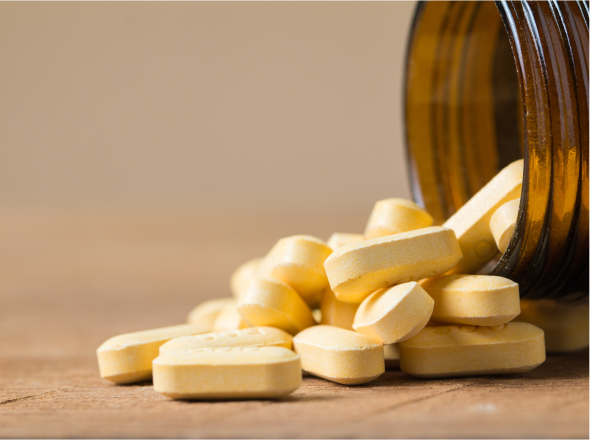
Managing hair growth and nutrients starts with consistent intake, not temporary fixes. The right food plan restores iron reserves and stabilizes vitamin D activity before follicles weaken further. Under medical advice, the best supplements for hair loss due to deficiency can complement your diet — only when needed, never by default.
Best iron sources for healthy hair growth
When you look for foods rich in iron for hair health, think of protein-rich meals first.
- Main dietary sources: red meat, poultry, fish, lentils, beans, and fortified cereals.
- Iron supplements: prescribed when diet alone isn’t enough.
- Improving absorption: combine iron-rich foods with vitamin C to increase ferritin levels naturally and avoid caffeine or calcium during meals.
How to increase vitamin D for hair regrowth?
Vitamin D influences every phase of your follicle cycle. Whether through sunlight, food, or supplements, maintaining proper levels helps prevent vitamin D deficiency symptoms and supports long-term scalp balance.
- Food sources: oily fish, egg yolks, mushrooms, and fortified dairy.
- Sun exposure: moderate daily light helps your body produce vitamin D naturally, answering the question can vitamin D deficiency cause hair loss before it turns clinical.
- Supplements: consult your physician for the ideal vitamin D3 dosage for hair regrowth and monitor progress over time.
BHC Takeaway
Testing comes first. Check ferritin, vitamin D, and complete blood count before acting. Prioritize diet before supplements. Combine foods rich in iron for hair health with vitamin C to improve absorption. Support vitamin D and hair follicles through sunlight and balanced intake. Correcting iron and vitamin D deficiency hair loss starts with evidence, not assumption.
Our final takeaway
Iron and vitamin D deficiency hair loss often hides behind what looks like everyday shedding. A simple blood test can reveal more than months of guessing — especially when low ferritin levels hair loss or vitamin D deficiency symptoms go unchecked. Correction begins with food, then guided supplementation, never the reverse. Restoring hair growth and nutrients balance protects the scalp before damage turns chronic.
To deepen your understanding, explore Beyond Hair & Culture’s articles on the real difference between alopecia and hair loss, the role of blood tests and telogen effluvium, and how hair oils and serums influence regrowth.


